

Remember when you first started your fitness journey? Every week felt like a victory. You could suddenly do more push-ups, lift a heavier grocery bag without grumbling, or just feel a bit more energetic throughout the day. It’s an exciting phase! But then, weeks or months later, something shifts. The scale stops moving, your muscles don’t feel as challenged, and you’re looking in the mirror wondering, “Am I still making progress?”
If you’re nodding along, know this: you’re not alone, and you’re not doing anything wrong. In fact, hitting this plateau is actually a good sign. It means your body has successfully adapted to the demands you’ve placed on it. It got stronger, fitter, and more efficient. But now, it’s comfortable. And comfort, in fitness, is the enemy of progress.
Many beginners at this stage get discouraged and think their home workout in the Philippines isn’t effective. They might even quit, thinking they’ve failed. The real issue isn’t the workout itself; it’s the lack of one crucial principle.

The Not-So-Secret Secret: Progressive Overload
The single most important thing to do when you stop seeing results is to embrace a concept called Progressive Overload. It sounds technical, but the idea is incredibly simple: to keep getting stronger and seeing changes, you must consistently make your workouts a little bit harder. Think of it like learning a new skill. You wouldn’t just practice the C-major scale on a piano forever and expect to play a concerto. You have to challenge yourself with new, more complex pieces. Your muscles work the same way.
Your body is a master of adaptation. When you perform the same routine with the same weight and same number of reps, your body eventually says, “I’ve got this. It’s easy now.” It becomes so efficient that it no longer needs to change or grow. According to research published in the International Journal of Sports Physical Therapy, mechanical tension is a primary driver for muscle growth, and this tension must increase over time for adaptation to continue.
So, how do we keep things challenging, especially when you’re just figuring out how to start a workout for beginners at home? Let’s break it down.
Simple Ways to Apply Progressive Overload at Home
You don’t need a gym full of fancy equipment to do this. Here are five practical ways to start applying progressive overload to your routine today:

1. Increase Your Reps or Sets
This is the most straightforward method. If you’ve been doing 10 squats in a set, aim for 12. Once you can comfortably do 12-15 reps, instead of just adding more, try adding another set. If you did 3 sets of 10, try 4 sets of 10.
2. Increase the Weight (Resistance)
If you have dumbbells, this is obvious. Move from the 5lb weights to the 8lbs. But what if you have no equipment? Get creative! Use a backpack filled with books for your squats or lunges. Hold water bottles while doing bicep curls. The goal is simply to increase the resistance your muscles have to work against.
3. Decrease Your Rest Time
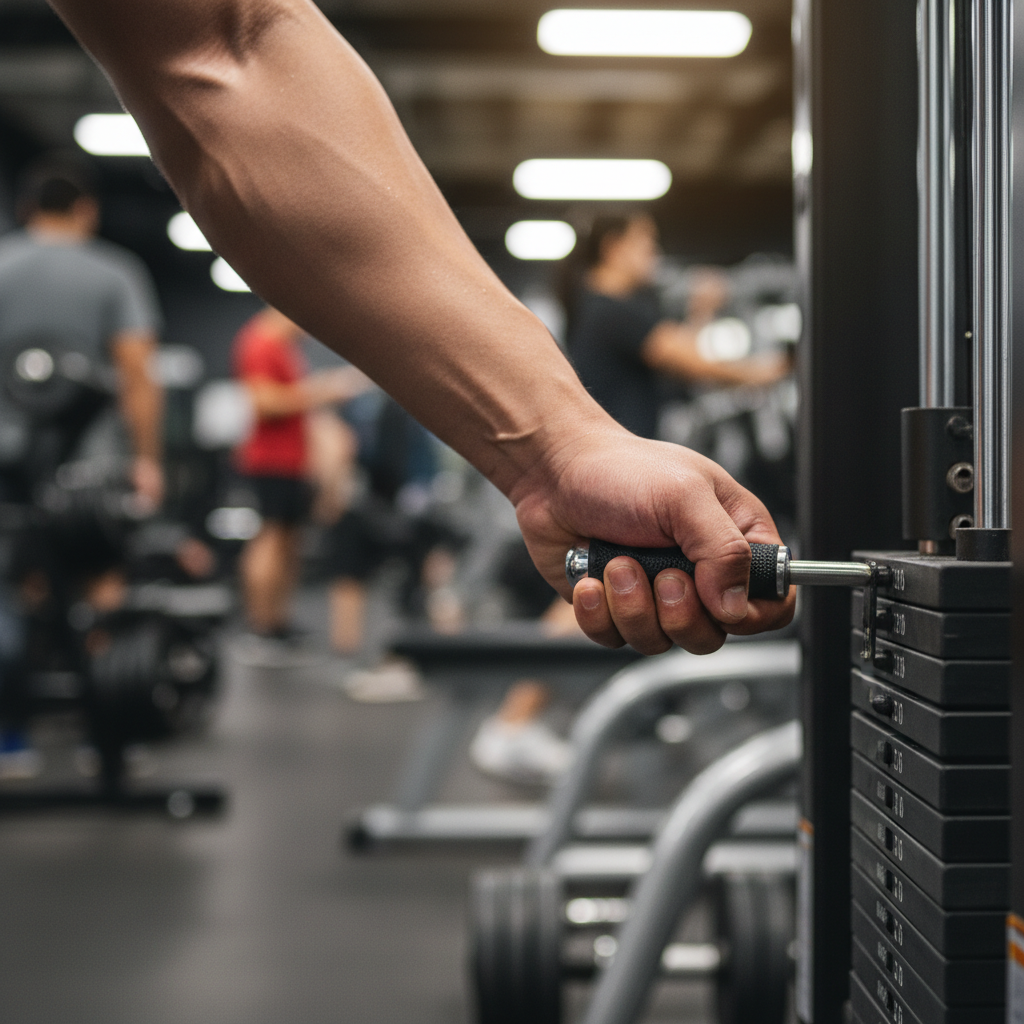
Challenge your muscular endurance and cardiovascular system by shortening the rest periods between sets. If you normally rest for 60 seconds, try cutting it down to 45 seconds. It’s a simple tweak that can make a familiar workout feel brand new and much more intense.
4. Increase Time Under Tension (TUT)
Instead of speeding through your movements, slow them down. For example, during a push-up, take three full seconds to lower your body and three seconds to push back up. This increases the time your muscles are actively working, which can spark new growth and strength gains. It’s a fantastic way to make bodyweight exercises significantly harder.
5. Try a More Challenging Variation
Mastered the basic squat? It’s time to level up. Progress from a bodyweight squat to a jump squat. Nailed the knee push-up? Move on to incline push-ups against a table or, eventually, a full push-up. This is where having a plan is key. If you’re still at the very beginning, our Beginner’s Guide to REALLY Starting can help you build that initial foundation.
Don’t Let a Plateau Stop You
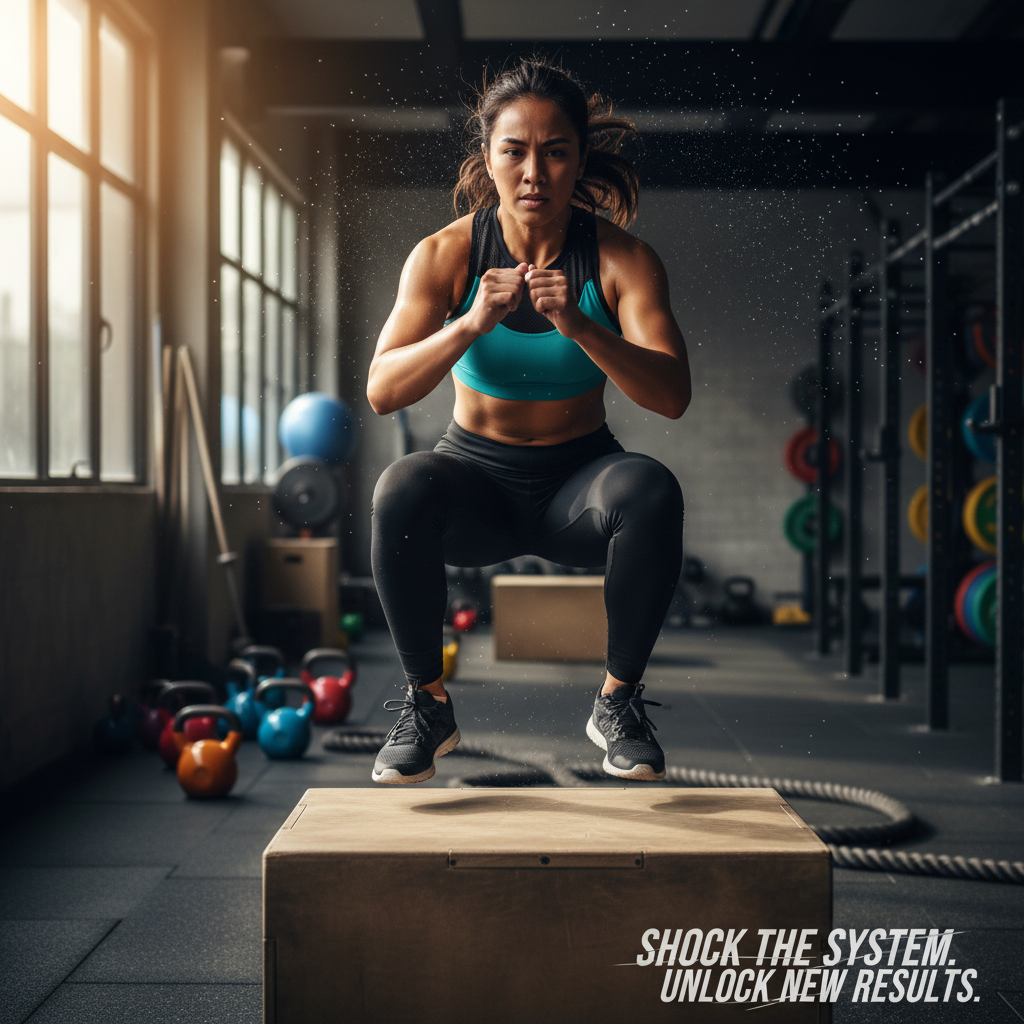
Hitting a plateau isn’t a sign of failure; it’s a sign that you’ve succeeded in conquering the last challenge you gave your body. It’s a natural and necessary part of any fitness journey. The key is to see it as a milestone, not a roadblock. Your body is asking for a new challenge, and now you have the tools to give it one.
As a certified fitness coach, I’ve seen countless beginners overcome this exact hurdle. The solution is always the same: stop repeating what’s comfortable and start challenging what’s possible. It’s about making small, consistent changes that add up to big results over time. According to the American Council on Exercise, this principle is fundamental for achieving long-term fitness goals and preventing burnout.
Navigating these changes can be tricky on your own. When should you add weight versus reps? Which exercise variation is right for you? This is where guidance can make all the difference. If you’re ready to break through your plateau and build a workout that grows with you, I can help.
Let’s work together to create a personalized fitness plan that keeps you challenged, motivated, and constantly moving towards your goals. No more guesswork, just results. Tara, let’s get you unstuck and back on the path to progress. Lezzgo!